
You’ve done the hard part: you’ve written something. Maybe it’s a collection of family stories, a memoir, a transcription of oral histories, or a deeply personal reflection. Now you’re wondering: What’s next? How do you take this raw material and turn it into something lasting—something that will be read, cherished, and preserved for generations?
As a custom publisher focused on memoir and legacy books, I’ve worked with families, individuals, companies, and other historians—and I’ve seen this question arise time and again. The good news? There’s a clear path forward. The even better news? There’s no one-size-fits-all answer. Your story is unique, and your publishing journey should be too. I’ll walk through the general stages of that publishing journey: with a note that at any point, support is always available! !
1. Writing and Interviewing
This is the foundation. Whether you’ve written your story yourself, or whether you’ve decided to work with a ghostwriter, this stage is about gathering the raw material. Don’t worry about perfection—just get the words down. Need motivation? NextGen offers regular free webinars to get you thinking & moving forward. The goal here is completeness and authenticity.
Two of my favourite quotes for this stage are:
“Abandon the idea that you are ever going to finish. Lose track of the 400 pages and write just one page a day, it helps. Then when it gets finished, you are always surprised. – John Steinbeck
“The only way I can get anything written at all is to write really, really shitty first drafts” – Anne Lammott, best-selling memoir author
If you are in the writing and/or interviewing stage: just write, and don’t look back! (unless you get stuck—in which case, contact us or join a webinar)
2. Editing
Once you have completed a first draft—and not until then—editing is where your story begins to shine. I recommend, as a general principle, at least three “internal” and three “external” rounds of editing. Internal rounds of editing are you, after you have finished writing, going through the entire book top to bottom and making the changes that stand out to you. Once you either feel the book is passable—or, when you just can’t stand to re-read the same text again—it’s time for an external editor. NextGen offers three primary types of editing:
- Developmental Editing – A professional editor with experience in your genre helps shape the story, offering big-picture feedback.
- Stylistic Editing – A professional editor provides input and suggestions on word choice, sentence structure, and overall voice/flow.
- Copyediting – Grammar, punctuation, consistency, and clarity.
Each round builds on the last, ensuring your story is both compelling and clean. Again, I have a favourite quote here:
“Writing without revising is the literary equivalent of waltzing gaily out of the house in your underwear” – Patricia Fuller
3. Design, Publishing & Printing
Design transforms your manuscript into a book. Design is where your book starts to feel real. It’s also where format decisions come into play. We are great believers in big photos: if we want to engage younger generations who are used to Instagram, Tiktok, full-screen full-colour images, we need to find ways to bring characters and photos to the forefront.
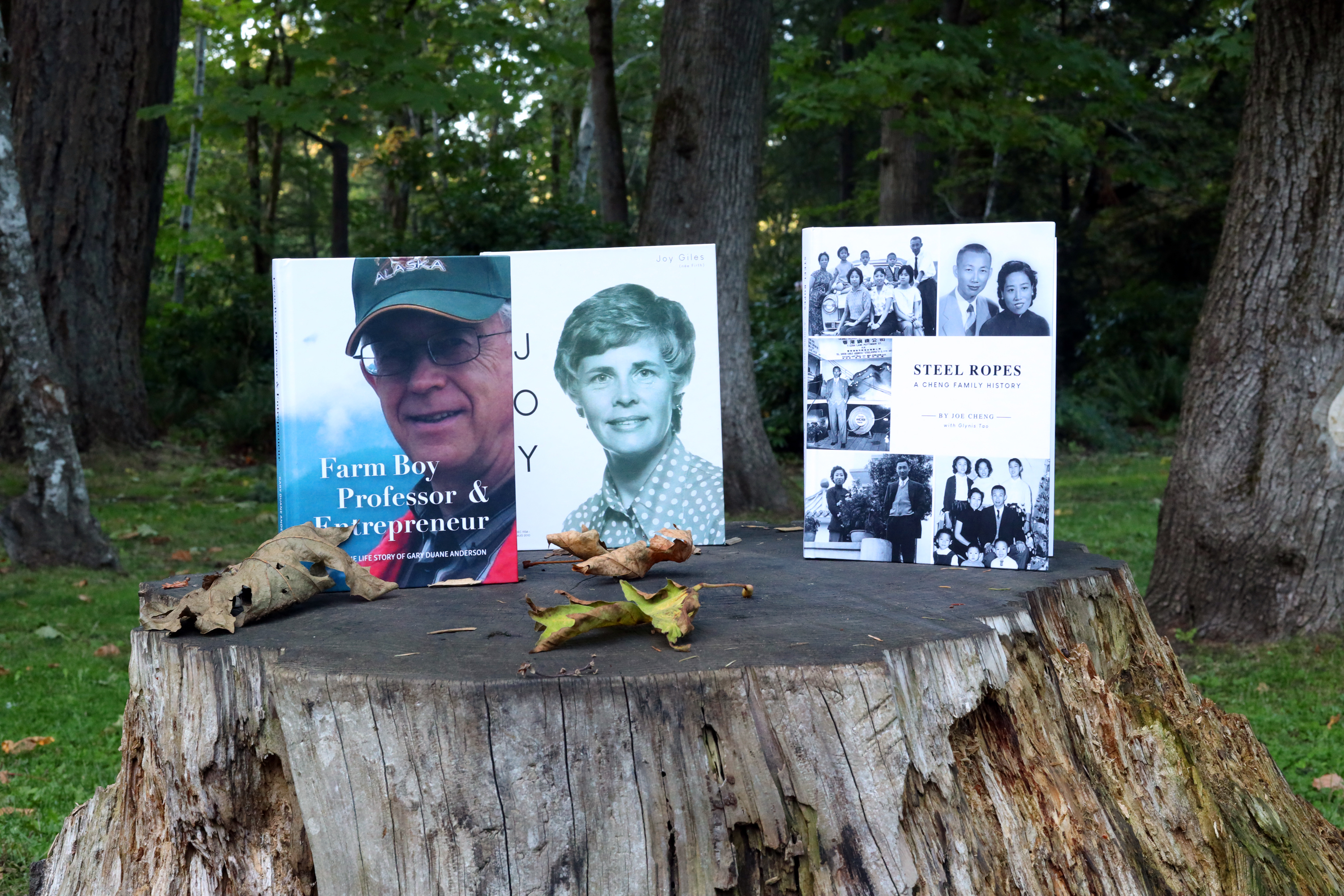
At NextGen, we have designed a whole range of books – everything from a tiny 4” x 6” ‘mini-book’ (yes, truly that small) to a 300-page 11” x 9” hardcover coffee-table book. You can see samples here. And while each project is a little different (we like it that way!), we find many of our books fall into two categories:
Coffee-Table Style Books
- Audience: Family and close friends.
- Features: High-quality printing, full-color photos, hardcover binding.
- Ideal For: Legacy projects meant to be treasured and passed down. These books are often printed in small quantities and not sold publicly.
Memoir-Style Paperbacks
- Audience: Wider public or community.
- Features: Portable, affordable (sometimes less than $10 per copy to print!), available via online retailers.
- Ideal For: Stories with broader appeal—immigration journeys, community histories, or life lessons that resonate beyond the family.
Whie direction will you lean—or will you choose a third? There’s no cookie-cutter approach. Your story is unique, and your publishing path should honor that uniqueness.
Preserving Your Story for 100 Years
Ultimately, the goal of a custom publisher is preservation. Whether your book sits on a family shelf or circulates in libraries we want to ensure your story lives on—for 100 years and more. That means taking the time to craft a coherent and compelling narrative, designing to ensure easy engagement from all ages, and printing with quality in mind.
So, if you’ve written something and you’re wondering what’s next—know that you’re already on the path. With thoughtful editing, intentional design, and a format that fits your vision, your story can become a lasting legacy.
Let’s make sure it’s still being read 100 years from now.
Mali Bain is the founder of NextGen Story: Custom Publishing. Focused on memoir and legacy books, their team provides writing, editing, design and publishing services for individuals, families, and companies. You can contact her at mali@nextgenstory.com.

 Personal Historians Network West